Questions and answers
Do babies sleep differently to adults?
Babies were designed to wake up often at night to feed and cuddle, and remember many adults wake during the night, too. They grow quickly in the early weeks and months of their lives and have very small stomachs. Therefore they need to feed around the clock to meet their needs.
Becoming a parent is a very special time. Getting to know your new baby and learning how to care for their needs can be one of the most rewarding experiences of your life. However, it can also be challenging, especially when you are tired and your baby is wakeful and wanting to feed frequently during the night. Talk to your health visitor about caring for your baby at night.
How long should my baby sleep?
Babies sleep is more or less evenly distributed between day and night, and occurs in 2-3 hour bouts. It often takes several months for a day /night pattern of wake and sleep to become established.
What do I need to know about safe sleep?
Wherever your baby sleeps you need to ensure they are safe.
Following this advice for every sleep, day and night, reduces the risk of sudden infant death syndrome (SIDS, previously known as cot death). The safest place for a baby to sleep is in their own clear, flat, firm separate sleep space (e.g. a cot or Moses basket) in the same room as you. Always place your baby on their back to sleep. Place your baby to sleep in a separate cot or moses basket in the same room as you for the first six months. Use a firm, flat, waterproof mattress in good condition. Don’t cover your baby’s head or face while sleeping, and avoid lose bedding. Avoid letting your baby get too hot and Keep the room where your baby sleeps a smoke free zone.
What should I do about safe sleep when my baby is unwell?
Many infants like to be kept close and held when they are unwell, so be careful never to fall asleep with your baby on a sofa or armchair. If you think you may fall asleep, move somewhere safer such as the bedroom and make sure your baby is on their back in a clear, safe space free from bedding.
When your baby is unwell their usual sleep pattern may be disturbed and it can be exhausting for you and your baby. It is important to continue to follow the latest safe sleep guidance even when your baby is sick to reduce the chances of sudden infant death syndrome.
Where should my baby sleep?
Place your baby to sleep in a separate cot or Moses basket in the same room as you for the first six months, using a firm, flat, waterproof mattress in good condition. Never sleep on a sofa or in an armchair with your baby, and avoid co-sleeping if you or your partner smoke, have been drinking alcohol, or have taken drugs that make you feel sleepy.
With so many products available, it can be hard to know what is safest for your baby and what to look for on labels. For clear, trusted advice about cots, cribs, slings, sleep products, positioners and pods, visit the Lullaby Trust website.
Does Surrey Offer the Care of Next Infant Programme (CONI)?
Yes. CONI is a programme is for parents who are expecting / given birth to a baby following the sudden unexpected death of their previous baby. The programme is usually offered for 6 months after the baby is born but may be longer depending on the individual circumstances. For further details about CONI visit the Lullaby Trust website in useful links below or you can speak to our health visiting team by contacting us.
Keeping safe in hot weather?
Use these tips to keep your baby safe and comfortable while you’re out and about.
Don’t cover your pram, buggy or travel system with blankets, cloths or any cover that stops the air flowing. They risk your baby getting too hot. Check your baby regularly to see if they’re getting too hot by feeling their chest or the back of their neck. If they feel clammy or sweaty, these are signs they’re getting too hot, so remove a layer of clothes and adjust the room temperature. Use a clip-on sunshade or parasol. This will provide shade while allowing air to circulate. Keep babies out of direct sunlight as much as possible.
When the weather is hot, it’s important to make sure that your child has plenty of fluids. If you’re solely breastfeeding your baby, they don’t need any extra water until they start eating solid food. But during hot weather, they may want to breastfeed more than usual. Once they start eating solid foods, they will need extra water.
At night try to keep rooms fairly cool, at 16 – 20°C if possible. Open the door and window if it’s safe to and close the curtains during the day. Use lightweight clothes and lightweight bedding, or even none at all. If you use a baby sleep bag check the guidance for which tog to use for the room temperature. For further information visit the Lullaby Trust website.


 https://surreychildandfamily.co.uk/wp-content/uploads/2026/06/newborn-baby-girl-sleeping-blue-sheets-home-1000x664.jpg
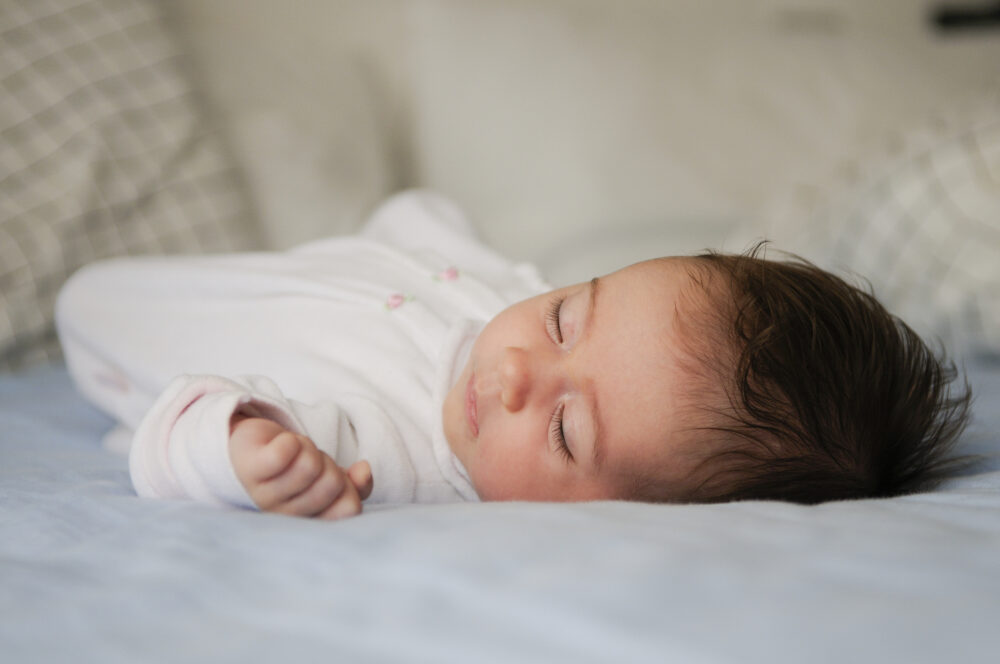
Sleeping baby lying on a bed.
https://surreychildandfamily.co.uk/wp-content/uploads/2026/06/newborn-baby-girl-sleeping-blue-sheets-home-1000x664.jpg
Sleeping baby lying on a bed.