Questions and answers
How can I improve my child's handwriting or early writing skills?
Provide short, frequent practice using fun activities (e.g. drawing, tracing, chalkboards). Focus on posture, pencil grip, and and try multi-sensory letter formation, consider aids such as zoned handwriting paper for orientation.
How can I improve my child’s fine motor skills (e.g. pencil grip, using scissors)?
Encourage activities that strengthen hands and fingers, such as playdough, threading, Lego, and cutting practice. Ensure tools (scissors, pencils) are the right size and model correct use.
Why does my child find it hard to sit still or maintain good posture at school?
Your child may have underlying difficulties with core strength, balance, or sensory regulation. Movement breaks, supportive seating, and posture reminders can help them stay comfortable and engaged.
What can I do if my child struggles with attention and staying focused on tasks?
Use clear routines, break tasks into smaller steps, and reduce distractions. Movement breaks and visual supports (e.g. timers, checklists) can help your child stay on track.
Why are transitions (e.g. stopping play, changing activities) difficult for my child and what can I do?
Transitions can be challenging due to difficulties with predictability or sensory processing. Give advance warnings, use visual timetables, and keep routines consistent to support smoother changes.
How can I support my child’s play and social skills?
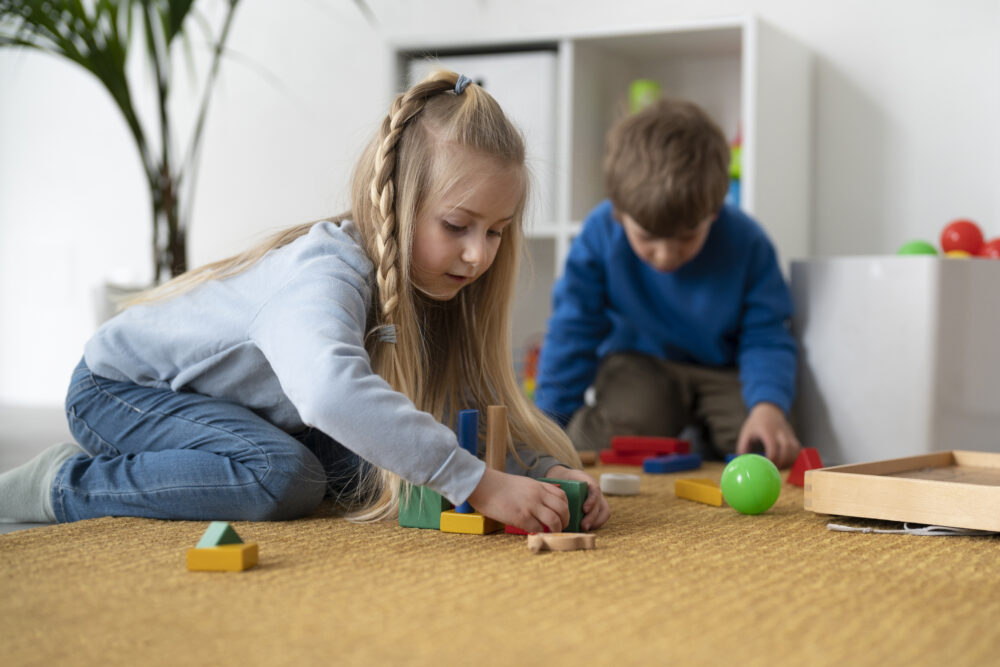
Model and practise skills through play (e.g. turn-taking, sharing). Use structured activities, small groups, and role play to build confidence and understanding of social situations.
Why does my child avoid PE or struggle with coordination and balance?
This may be linked to motor coordination or sensory processing differences. Build skills, strength and stability gradually through fun physical activities such as swimming or gymnastics, in a supportive, low-pressure environment.
Why does my child find it difficult to follow instructions or complete tasks?
They may struggle with attention, processing, or working memory. Use simple, step-by-step instructions, visual supports, and check understanding before starting tasks.
How can I help my child become more organised and independent at school?
Introduce routines and visual supports (e.g. checklists, labelled spaces). Teach skills step-by-step and gradually reduce support to build independence.
How can I help my child to use scissors?
Use child-friendly scissors, encourage a “thumbs up” grip, and practise short, fun activities like snipping paper or playdough.


 https://surreychildandfamily.co.uk/wp-content/uploads/2026/06/full-shot-cute-kids-playing-together-1000x667.jpg
Two children sit on the floor playing with colourful wooden blocks and shapes.