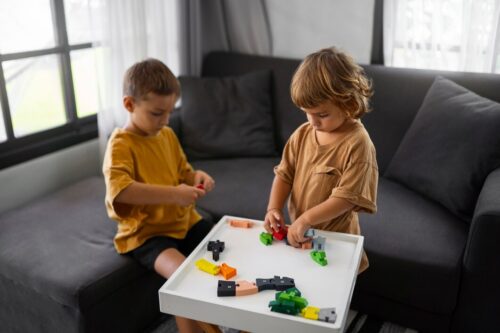
Play is fun and engaging Children enjoy leading the play; follow what your child is doing
- Get down to their level
- Join alongside them
- Watch what they doing and copy
- Model and extend play by one action
- Comment and use simple language
Every child will play differently Children also learn how to solve problems through their play.
Types of Play
People Play
People games are games without toys, involving you and the child in a relaxed environment where you are both enjoying each other’s company. These games have a predictable and repetitive element that works well. Ideas can include singing songs, tickles, peekaboo games.
Sensory / Exploratory Play
The child will play through exploring their environment by looking, touching, feeling, and smelling.
Cause and Effect Play
The child is learning that their actions can have an effect on something else.
Physical Play
The child develops movement and coordination skills. This type of play is good for active children.
Construction Play
This play can help develop hand eye co-ordination skills and help a child see how things fit together with each other e.g. stacking rings, inset puzzles, putting things in and out of containers.
Pretend Play with real objects
This type of play helps children understand everyday objects by using them for what they were designed for e.g. brushing their own hair You can then encourage them to relate the objects to other people e.g. brush your hair.
Simple Pretend Play
The child will use two objects and relates them together e.g. will put teddy/action figure onto the pretend bed, brush the toy’s hair, offer the toy a drink. You can model symbolic sounds alongside this play e.g. ‘mmmm’ when teddy is eating.
Sequences of Pretend Play
The child will link their pretend play actions into a sequence of 2 or more actions using a toy. They will demonstrate and carry out routines they recognise e.g. bath time, dinner time.
Small world Play
Introduce small world toys such as a dolls’ house or a farm so that play becomes more imaginative and less dependent on the real objects. Model for your child how the characters can interact with each other e.g. offering a cake to another figure. You may need to lead the play and show your child what they might do.
You can encourage the child to join in and copy. Later, the child might start the play; if so, follow their lead and comment on what they are doing. You can help the child start to use objects symbolically, pretending something is something else e.g. pretending a banana is a phone.
Imaginative Play
Play sequences become extended and more elaborate beyond the child’s experiences e.g. riding a flying unicorn. Introduce new ideas into play Create opportunities for acting out feelings, emotions and situations.