Questions and answers
How can I help toilet train my child?
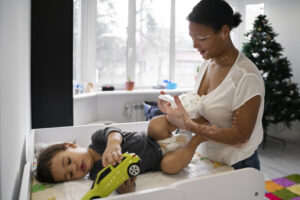
Try keep toileting routines calm, predictable and regular. Sitting on the toilet at the same times each day, such as after meals or before bath time, can help build a routine. Some children benefit from visual schedules, rewards, or using a step stool so they feel secure and balanced. Occupational Therapists can help if your child has a sensory, physical or emotional difficulties linked to toileting. See "Toileting Advice Sheet" document for more information on toileting.
My child refuses to sit on the toilet, how can I help?
Some children may feel anxious about the noise, smell, feeling of sitting, or fear of alling in. Try using a toilet seat insert and foot support to help your child feel safe and stable. Allow short periods of sitting at first and praise any small success. Avoid forcing your child to sit for long periods. See "Toileting Advice Sheet" document for further information.
My child will only poo in a nappy, how can I help?
This is common and can take time to change. Start by building confidence with toileting routines without pressure. Some families find it helpful to move gradually from nappy changes in different places, to changing in the bathroom, then sitting on the toilet while wearing the nappy before trying without it. You can also drop the stools from into the toilet bowl while your child watches to increase awareness of where it should be going. See "Toileting Advice Sheet" document for further information.
My child does not notice when they need the toilet, how can I help?
Some children have reduced body awareness and may not recognise the feeling of needing the toilet. Scheduled toilet visits, visual reminders and watching for signs such as fidgeting or hiding can help. Consistent routines are often important.
My child has accidents even though they were toilet trained before, why is this?
Changes in routine, anxiety, constipation, sensory needs, or difficulties recognising body signals can all affect toileting. Keeping routines consistent and speaking to your GP if constipation is suspected may help.
My child is scared to flush the toilet, why is this?
Try letting your child leave the room beofre flushing or allowing them to cover their ears. Gradual exposure and giving your child control over when the toilet is flushed can help reduce anxiety over time.
My child struggles to get dressed independently, how can I help?
Break dressing tasks into smaller steps and practice one skill at a time. Lay clothes out in order and use simple instructions or pictures. Loose-fitting clothing and elastic waistbands may make dressing easier while skills are developing.
My child always puts clothes on backwards, how can I help?
Teaching children to check labels, colours, or picture markers inside clothing can help them find the front and back easier. Practicing when not rushed is also often easier.
My child cannot manage buttons or zips, how can I help?
Large buttons and zip pulls are usually easier to learn with first. Practice during play activities, such as on a doll or teddy bear, or while the item of clothing is laid out infront of the child on a table. Then try when the child is wearing the clothing.
My child dislikes certain clothes, why is this?
Some children are more sensitive to textures, seams, waistbands, or labels. Trying softer fabrics, seamless socks, removing lavels, or allowing preferred clothing styles may help your child feel more comfortable. This can sometimes be linked to sensory preferences or anxiety around change. Introduce new clothes slowly and alongside familiar items. Avoid forcing changes suddenly unless needed for safety.
My child cannot tie their shoelaces, how can I help?
Learning to tie shoelaces needs finger coordination, using both hands together, and remembering steps. Short daily practice sessions often work better than long sessions. Coloured laces, songs, or step-by-step pictures may help. See "Tying Shoelaces Advice Sheet" for further information.
My child cannot use a knife and fork?
Check that your child is sitting in a stable position with feet supported. Smaller or adapted cutlery may help some children. Practicing cutting soft foods first is often easier than harder foods. See "Cutlery Skills Advice Sheet" document for further information.
My child finds it hard to open lunch boxes or packets?
Allow extra practice at home with containers, packets, and drinks bottoles. Choosing easier fastenings and practicing when calm can help independence.
My child eats with their fingers instead of cutlery?
Children often need repeated opportunities to practice using cutlery. Use a grading approach and start with using a spoon, and start with foods that are easier to scoop. Load the spoon for the child and support with hand over hand bringing to their mouth, graduallyreduce support. Introduce the fork once your child is using a spoon, and use to stab soft foods. See "Cutlery Skills Advice Sheet" for further information.
My child refuses to brush their teeth?
Some children find toothbrushing uncomfortable because of the taste, texture, sound, or feeling in their mouth. Try different toothrbushes, flavoured or unflavoured toothpaste, or brushing for short periods at first. A mirror, visual timetable, song, or brushing together can help build a routine. Praise small successes and keep the routine calm and predictable. See "Sensory Sensitivites Advice Sheet" for further information.
My child cannot wash or brush their hair independently?
Hair washing and brushing can be difficult because of tangles, sensitivity to touch, water near the face, or remebering the steps. Using detangling spray, a soft brush, or a flannel to cover the eyes may help. Break the task into simple steps and suing pictures or routines can support independence over time. See "Sensory Sensitivites Advice Sheet" for further information.
My child takes a very long time complete self-care tasks?
Some children need more time to process instructions, plan movements, or manage sensory information. Keeping routines consistent, reducing distractions, and allowing extra time can help reduce stress. Breaking tasks into smaller steps and using visual prompts may also support independence.
My child needs help with every part of their morning routine, how can they be more independent?
Morning routines can feel overhwelming for some children, especially when there are lots of steps to remember. Visual schedules, photo checklist, or simple wirrten routines can help children learn the order of tasks. Keeping mornings calm, predictable, and organised can also help children become more independent over time.
Does my child need a diagnosis to access support?
No. Children do not need a diagnosis to access occupational therapy support. Occupational Therapists look at how difficulties affect everyday activities such as dressing, toileting, eating, washing and independence at home or school.


 https://surreychildandfamily.co.uk/wp-content/uploads/2026/06/young-family-enjoying-trips-1000x667.jpg
An adult fastens a child’s backpack strap while standing together on a tree‑lined path.
https://surreychildandfamily.co.uk/wp-content/uploads/2026/06/young-family-enjoying-trips-1000x667.jpg
An adult fastens a child’s backpack strap while standing together on a tree‑lined path.