Surrey Child and Family App Logo

Download our new Surrey Child and Family app!

Our new family-focused app gives lots of information and advice.

Download our app
Current Vacancies
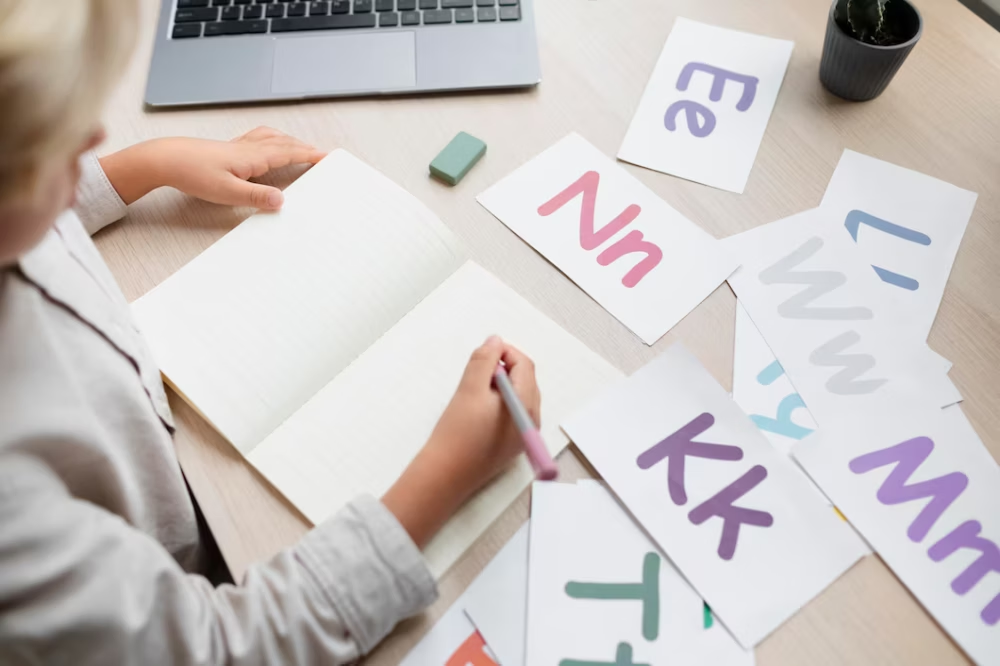
Little boy writing on a notebook at a table. Little boy writing on a notebook at a table.

Speech, Language and Communication Development

For:

Speech, language and communication development is how your child learns to understand and use sounds, words, and gestures. It’s common to feel unsure or worried if your child’s skills seem different from other children. You are not alone, and support is available if you need reassurance or advice.

More about speech, language and communication development

Speech, language and communication development is how your child learns to understand words, use sounds, and share their thoughts and needs. This starts from birth and grows through everyday moments like talking, playing, and reading together. Even simple interactions help your child build these skills over time.

Children develop at different speeds, and there are many reasons why skills may take longer to grow. Your child may need more time, practice, or support to understand words or use them. Busy routines, less opportunity to chat and play, or hearing difficulties can also affect development.
As a parent or carer, you might notice your child is not using as many words as others, or seems to find it hard to understand what is said to them. This can feel worrying, frustrating, or make you unsure about what to do next. It is normal to have these feelings, especially if you are comparing your child to others.

You should seek help if you are concerned about your child’s speech, understanding, or communication at any stage. Trust your instincts if something does not feel right or if progress seems slow. Getting advice early can help your child build skills and feel more confident.

Questions and answers

How do I know if my child’s speech and language are developing as expected?
Children develop at different rates, but there are common milestones for speech, language, and communication. If your child is not using sounds, words, or gestures like other children their age, you may start to feel concerned. Trust your instincts and seek advice if something doesn’t feel right.
What can I do at home to help my child’s communication?
Simple everyday activities can make a big difference. Talk to your child, listen to their attempts to communicate, and play together using songs, books, and games. Giving them time to respond and following their interests also helps build their skills.
When should I ask for help?
It’s a good idea to seek support if you’re worried about your child’s speech, understanding, or interaction with others. You don’t need to wait for things to get worse. A health visitor, GP, or nursery staff can help guide you and refer you if needed.
Can my child grow out of a speech or language delay?
Some children do catch up on their own, especially if they have good understanding and are making steady progress. However, others may need extra support to develop their communication skills. Getting advice early can help you understand what your child needs.
Can hearing problems affect speech and language development?
Yes, hearing is important for learning sounds, words, and how to communicate. If a child cannot hear clearly, it can slow down their speech and language development. If you have any concerns, a hearing check may be recommended.
Does my child’s behaviour affect their communication?
Sometimes behaviour is closely linked to communication. Children who find it hard to express themselves may show frustration, have tantrums, or seem withdrawn. Supporting their communication can often help improve behaviour over time.

Upcoming events (showing 1–6 of 181)

Video library

Watch and follow along.

Services that can help

Back to top Quick exit
Surrey Child and Family
Privacy Overview

This website uses cookies so that we can provide you with the best user experience possible. Cookie information is stored in your browser and performs functions such as recognising you when you return to our website and helping our team to understand which sections of the website you find most interesting and useful.