More about preparing my child’s communication skills for starting school
Preparing your child’s communication skills for starting school means helping them to understand what others say, express their needs, and join in with learning and play. By the time they start school, most children are beginning to answer simple questions, speak in short sentences, and follow everyday instructions. Some children may need more time or support to build these skills.
There are many reasons why a child might find communication harder. They may struggle to stay focused, have fewer chances to practise talking and playing with others, or develop these skills at their own pace. Busy or noisy environments can also make it harder for children to listen and understand what’s being said.
You might notice your child gets frustrated if they can’t explain what they want, or they may avoid talking or joining in with others. They might find it hard to listen, follow instructions, or stay on one activity. This can feel worrying, especially when they are getting ready to start school.
Helping your child’s attention and play skills can make a big difference. Keeping instructions short, reducing background noise, and getting your child’s attention before speaking can help them focus. Playing together—following your child’s interests, using simple language, and commenting on what they are doing—helps them learn without pressure.
Strong communication skills also support making friends, joining in, and understanding what is happening at school. This includes social skills like turn-taking and eye contact, building sentences, learning new words, and speaking clearly. Some children find these skills harder to develop, which can make starting school feel challenging.
You can support social skills and conversation by getting down to your child’s level, making eye contact, and keeping activities fun. Talking about feelings in stories or on TV and praising positive behaviours can help them learn how to interact. For sentence building, repeat what your child says using the correct words and add extra detail.
To build vocabulary and clearer speech, use simple language, repeat new words often, and show what they mean using objects or pictures. Speak slowly and clearly, and model the correct way to say words. If you don’t understand, encourage your child to try again or use gestures. If your child is finding communication very difficult or not making progress, it’s okay to seek help—support and advice are available.


 https://surreychildandfamily.co.uk/wp-content/uploads/2026/06/young-woman-doing-speech-therapy-with-kids_23-2149110275.jpg.avif
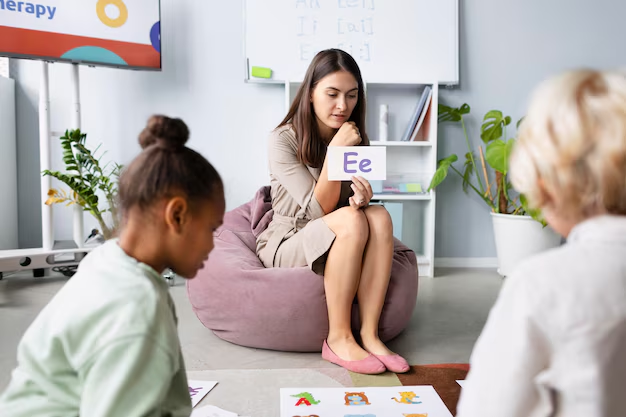
Women holding up a letter card for children sitting on the floor.