Surrey Child and Family App Logo

Download our new Surrey Child and Family app!

Our new family-focused app gives lots of information and advice.

Download our app
Current Vacancies
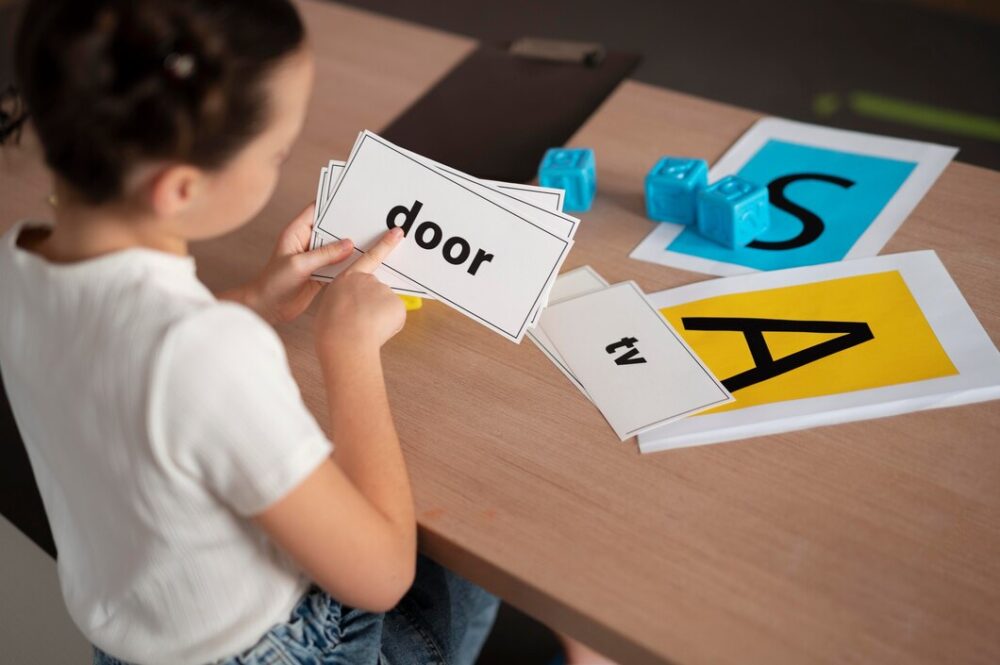
A child holds word and letter cards, pointing to the word ‘door’ during a learning activity at a table. A child holds word and letter cards, pointing to the word ‘door’ during a learning activity at a table.

Supporting My Child’s Use of Words, Phrases and Sentences

Expressive language is how you use words, sounds, or actions to share what you think and feel. If you or someone you care about finds this hard, it can feel frustrating or upsetting, but you are not alone. With the right support, people can learn to communicate more clearly and feel more confident.

More about supporting my child’s use of words, phrases and sentences

Expressive language is how you share your thoughts, needs, and feelings with others. You might use words, sounds, signs, or gestures to do this. If you have difficulties with expressive language, you may find it hard to get your message across or to find the right words. This can happen to both children and adults.

There are many reasons why someone might have expressive language difficulties. For some people, it is part of how they develop and learn to talk. Others may have hearing differences, learning needs, or conditions that affect communication. Sometimes there is no clear cause, and it can simply take longer to build these skills.

It can feel frustrating when you know what you want to say but cannot say it clearly. You might feel misunderstood, upset, or lose confidence in speaking. Children may show their feelings through behaviour, and adults may avoid speaking situations. These feelings are common, and many people experience them at times.

It is a good idea to seek help if these difficulties are not improving, or if they are getting in the way of daily life, learning, or relationships. You might also want support if you feel worried, frustrated, or stuck. Getting help early can make a big difference and support better communication over time.

Questions and answers

What is expressive language?
Expressive language is how we use words, sentences, and gestures to share thoughts, needs, and feelings. It includes speaking, using signs or symbols, and sometimes writing. Some people find it hard to find the right words or put sentences together.
What might cause problems with expressive language?
There can be many reasons, such as speech and language delays, learning differences, hearing problems, or medical conditions affecting the brain. Sometimes children develop language more slowly without a clear cause. Each person’s situation is different.
How do I know if someone has expressive language difficulties?
They may use fewer words than expected, struggle to form sentences, or find it hard to explain things. They might get frustrated when trying to talk or avoid speaking. You may also notice they understand more than they can say.
Can expressive language improve?
Yes, many people make good progress with the right support and practice. Speech and language therapy, play, and everyday conversations can help build skills. Progress can take time, but small steps make a big difference.
When should I seek help?
It’s a good idea to seek help if you are worried about speech, language, or communication at any age. Early support can be very helpful. You can speak to a GP, health visitor, or a speech and language therapist for advice.

Video library

Watch and follow along.

Downloads

Back to top
Surrey Child and Family
Privacy Overview

This website uses cookies so that we can provide you with the best user experience possible. Cookie information is stored in your browser and performs functions such as recognising you when you return to our website and helping our team to understand which sections of the website you find most interesting and useful.