Surrey Child and Family App Logo

Download our new Surrey Child and Family app!

Our new family-focused app gives lots of information and advice.

Download our app
Current Vacancies
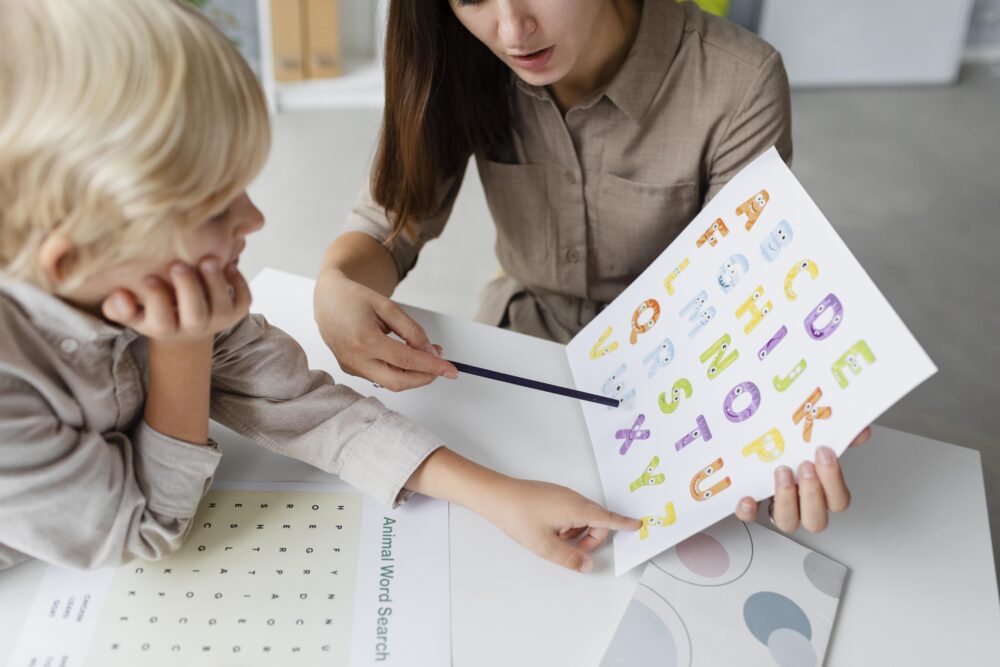
Adult pointing to alphabet letters while a child learns. Adult pointing to alphabet letters while a child learns.

Bilingualism and My Child’s Communication

For:

If your child is learning more than one language, it’s natural to wonder if this could affect how they communicate. Many families share this worry, but learning two languages does not cause speech or language delays — children can develop their communication skills in both languages over time. Every child develops at their own pace, and bilingual children may show slightly different patterns as they learn. You’re not alone in feeling unsure or concerned, and with the right support and understanding, your child can build strong communication skills.

More about bilingualism and my child’s communication

If your child is growing up with more than one language, you might wonder if this will affect how they learn to talk and understand others. Bilingualism simply means using two or more languages in everyday life. Some children mix languages in one sentence or switch between them, and this is a normal part of learning. It does not mean your child is confused or has a problem.

It can sometimes look like your child is slower to talk, especially if you compare them to children who only learn one language. This is often because their words are spread across both languages, not because they are behind. Children usually build their new language skills from their first language, so using the language you feel most comfortable with helps them learn and communicate.

You might feel worried, especially if your child uses fewer words in English or mixes languages when speaking. This can feel confusing or make you question if you are doing the right thing. Many parents feel this way, but learning more than one language is a positive experience and can support your child’s learning, thinking and relationships.

It may be helpful to seek advice if your child is having difficulty understanding or using language in any language they speak, or if they are not making progress over time. For example, if they are not using words to communicate, not responding to simple instructions, or seem frustrated when trying to communicate. Trust your instincts — if you are concerned, it is okay to ask for support.

Questions and answers

Will my child be slow to talk if they have more than one language?
There is no evidence to show that children will be slow to talk if they are learning more than one language. In fact, a lot of research shows that having more than one language is an advantage.
My child is not talking at nursery; is this ok?
If If your child doesn’t speak English at home, when they start at nursery they may have a ‘quiet’ few months where they are listening and learning English before starting to speak it.
Why does my child mix two languages when they talk?
It is normal for bilingual children to mix languages when they talk. People often use the word that they think of first. This could be your home language or English.
Is it better to learn two languages together, or one after another?
There is no difference in the long term if a child learns one language, then another or if the child learns two at the same time. The important thing is they have enough exposure to all languages they are learning.
Back to top
Surrey Child and Family
Privacy Overview

This website uses cookies so that we can provide you with the best user experience possible. Cookie information is stored in your browser and performs functions such as recognising you when you return to our website and helping our team to understand which sections of the website you find most interesting and useful.